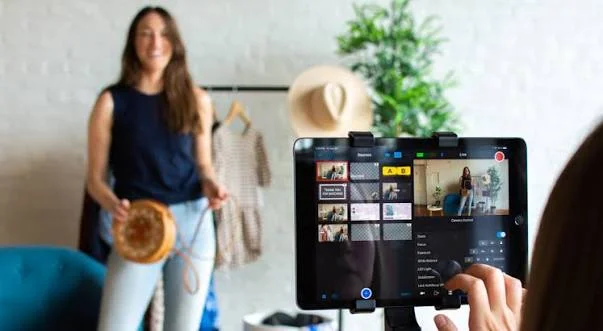
In today's world, live streaming has emerged as a practical tool for small businesses that are looking to reach out to consumers, showcase their knowledge, and develop better online communities. Live video offers a different way of interacting with the audience compared to conventional advertising. It gives brands the chance to connect with their consumers and build direct relationships.
Considering that small businesses face certain restrictions regarding advertising budgets, this is a perfect tool for increasing awareness and engagement in the various social media sites like Facebook, Instagram, TikTok, and YouTube.
1. Establishing Authentic Customer Connections:
Most of the customers are interested in meeting the people behind the business. Through live streaming, businesses can engage with their audiences rather than depending only on their promotional videos.
They can conduct questions and answers sessions, product demo sessions, behind the scenes videos, interviews, and educational.
2. Helps in Increasing Brand Visibility:
Consistent live broadcasts can offer some extra chances for small business owners to get noticed by their target audiences. Making excellent live sessions allows a business to capture the audience's interest as well as encourage viewers to share the content they have just watched.
Instead of turning every live session into a commercial, companies need to try to choose the topics to be discussed that will be interesting and beneficial to people. Tutorials, advice, industry discussion, product demo, and customer sessions can make people engaged.
3. Facilitates Real-Time Engagement:
One of the major benefits of the live video is its ability to interact. The viewers can put questions, express their opinions, react to the video and get answers to their queries during the broadcast.
Live sessions can help small businesses to determine what people are interested in and what kinds of questions are common among the customers. This data can be used to develop new products or marketing campaigns.
4. Makes Marketing Cost-effective:
Traditional marketing campaigns may cost a lot of money in terms of production, media and creative materials creation. Live streaming can be a great alternative since businesses can easily broadcast using their smartphones, computers, microphones and social networks.
Even the simplest yet well thought-out stream may be able to provide valuable marketing content without necessitating the involvement of a whole team of specialists. Nonetheless, there should be an emphasis on proper lighting, quality sound, good internet connection, and proper structuring.
5. Assists in Showing Products and Services:
The live video format becomes especially effective if a client needs to see how certain products and services work. Businesses can demonstrate their products, answer any questions, compare them, and discuss some usage cases.
For instance, a local fitness business can show certain exercises, a retailer can present his products, and a consultant can talk about the most common problems of clients and how his service helps to solve them. This type of content will allow customers to have more information regarding their future purchase.
6. Creates Trust through Transparency:
In order to compete with well-known brands, small businesses need trust. In live content format, you get the chance to show real people, real process, and true expertise.
You can discuss the most frequent questions that your customers ask you, discuss manufacturing of your products, introduce employees, and do some other actions that may seem natural.
At the same time, it is important to provide consumers with truthful information and clearly separate promotional messages from factual data. Such a consistent communication will have positive results for building long-term relationships with clients.
7. Provides Greater Social Media Interactions:
Livestreaming becomes an integral part of the entire social media campaign strategy. Companies can advertise their future livestream via posting, Stories, emails, and other communication mediums.
Later, companies can reuse valuable parts of the live show to create short clips, quotes, blog posts, social media posts. One live event will help companies to create multiple pieces of content.
Companies using mainly Facebook also can create different approaches to engaging appropriate Facebook live viewers by promoting the broadcast in advance, selecting topic that is interesting for the audience and encouraging interaction within the stream.
8. Provides Opportunities for Direct Feedback:
Small companies can conduct their own research based on livestreaming events. It means that questions and comments of viewers can tell companies about customers' preferences and interests.
In another scenario, a company introducing a new product could hold a live discussion forum and get audience responses. Although feedback from a livestream cannot replace the formal customer research process, it is still informative in some cases.
9. Facilitates Community Development:
Effective use of social media marketing does not involve reaching out to many people alone. It involves building a community based on shared interests and relevant information.
There are many different ways of doing so through recurring livestream programs, such as weekly Q&A sessions, monthly interviews with experts, product tutorials, and many others. The consistent schedule will motivate people to come back for a livestream session.
10. Offers Valuable Marketing Information:
Many leading social media websites have the ability to provide valuable analytic information to companies. It is possible to track the number of viewers, the total watching time, the level of engagement, comments, shares, etc., depending on the website and its capabilities.
Best Practices for Live Streaming on Small Business
To help the small business have a better livestream, it should:
- Defining one clear objective for every broadcast.
- Choosing topics that address genuine audience needs.
- Promoting the livestream before it begins.
- Use an appropriate title and description.
- Testing the camera, microphone, lighting, and internet connection.
- Preparing key talking points without making the broadcast overly scripted.
- Answer viewer's question when it is relevant.
- Have a consistent livestream schedule.
- Use the same livestream content on other platforms.
- Analyse the analytics of every livestream for improvements.
A livestream will work perfectly if the stream is integrated into a content strategy rather than just be done once as a promotion tactic. With the combination of valuable information, genuine communications, interactions with the audience, and performance metrics, the small business will get the benefit from live video.